

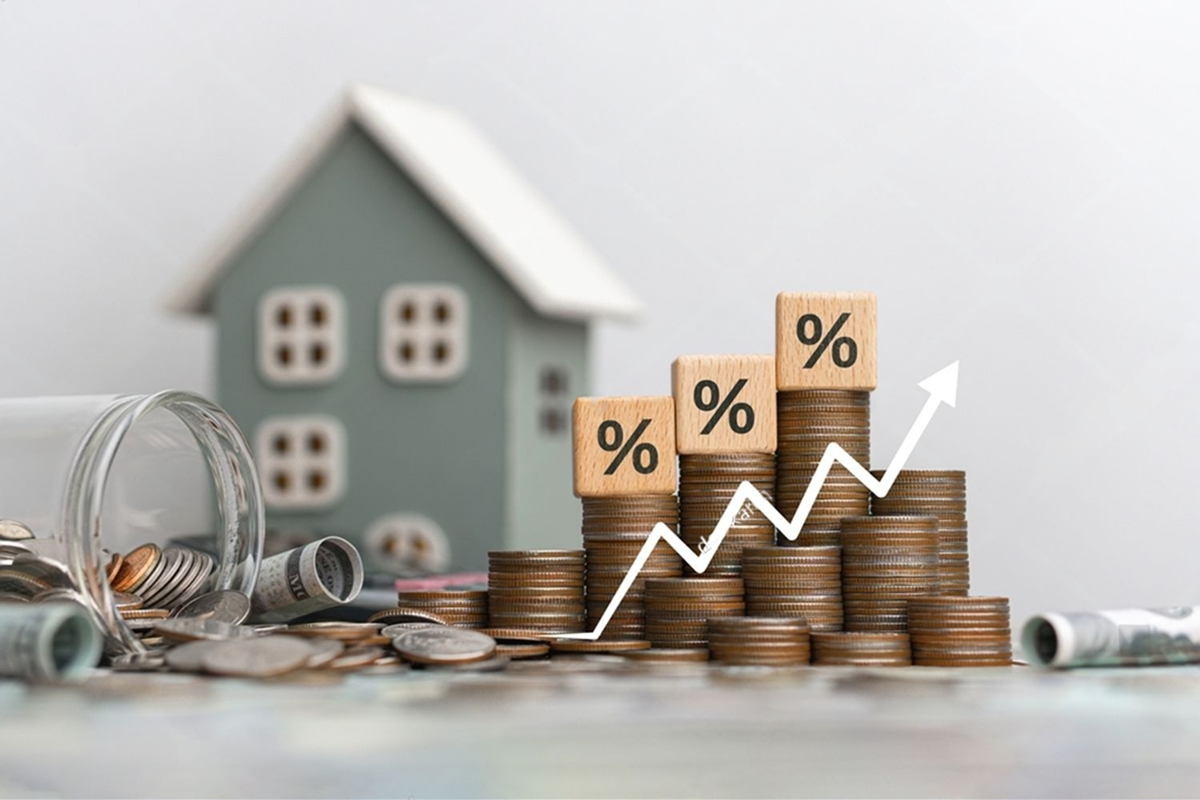
SKN | Florida Mortgage Rates Rebound to 7.28%, Renewing Pressure on Housing Affordability

U.S. mortgage rates reversed direction in the week ending November 19, rising after four consecutive weeks of declines and adding another constraint to Florida’s housing market. Freddie Mac reported that the average 30-year fixed rate increased to 7.28% from 7.11%, while the 15-year rate climbed to 6.66% from 6.45%. Although the latest increase remains below October’s peak of 7.40%, borrowing costs are still considerably higher than a year ago, limiting the purchasing power of households already facing substantial ownership expenses.
The Public Assumption: A Short Decline Signals Lasting Relief
Four consecutive weekly reductions had offered prospective buyers some indication that financing conditions might be improving. The latest increase challenges that expectation. The 30-year average now stands 1.02 percentage points above its 6.26% level a year earlier, while the 15-year rate is 1.12 percentage points higher than its previous-year average of 5.54%.
The reversal also demonstrates that mortgage pricing does not move in a straight line. Rates are influenced by inflation expectations, Federal Reserve policy and bond-market conditions. In particular, mortgage rates generally follow the direction of the 10-year Treasury yield, which lenders use as a benchmark when pricing home loans. A change in market expectations can therefore affect mortgage costs even without an immediate adjustment in the Federal Reserve’s policy rate.
The Economic Breakdown: Small Rate Changes Affect Monthly Budgets
The difference between 7.11% and 7.28% may appear limited, but its effect accumulates over a long repayment period. On an illustrative $400,000 loan amortised over 30 years, the principal-and-interest payment rises by approximately $46 per month when the rate increases between those two levels. This excludes property taxes, homeowners insurance, mortgage insurance and other ownership expenses.
The broader affordability challenge is already visible in Florida’s household economics. The Insurance Information Institute’s affordability index estimates that homeowners insurance consumes approximately 4.1% of median household income in Florida, placing the state among the least affordable nationally for this expense. Separately, University of Florida housing data put median income among owner-occupied households at approximately $91,195 in 2024. These measures illustrate why mortgage rates cannot be evaluated independently of recurring ownership costs. Insurance Information Institute
Market Segmentation: Coastal and Inland Ownership Costs
The effect of higher mortgage rates is not uniform across Florida. Coastal properties can carry additional insurance exposure associated with wind and flood risks, while inland markets face different combinations of insurance, taxes and maintenance expenses. The latest mortgage survey provides a national borrowing benchmark rather than county-level financing data, so it does not establish which Florida markets are experiencing the greatest affordability pressure.
Property type also matters. Single-family homeowners generally carry direct responsibility for exterior maintenance and repairs. Condominium owners face association fees, shared maintenance obligations and potential special assessments. Consequently, a lower-priced condominium does not necessarily produce a lower total monthly housing expense than a more expensive house.
The Hidden Picture: Insurance and Building Reserves
Florida’s condominium market has an additional cost consideration under the SB 4-D framework and subsequent legislative changes. Qualifying buildings must comply with structural inspection and reserve-study requirements, which can increase association contributions when major repairs need funding. Insurance premiums, maintenance and assessments can therefore offset some of the purchasing-power relief created by lower mortgage rates.
The available mortgage report does not provide county-level insurance costs, average HOA fees, vacancy rates or property-specific affordability ratios. These expenses must be assessed separately rather than treated as uniform statewide figures. If mortgage rates can reverse after only a month of declines while insurance and maintenance remain substantial, how much of Florida’s housing demand is dependent on financing costs becoming sustainably lower?

