

SKN | Miami Approves Three Towers, but Design Criticism and Supply Competition Raise Questions

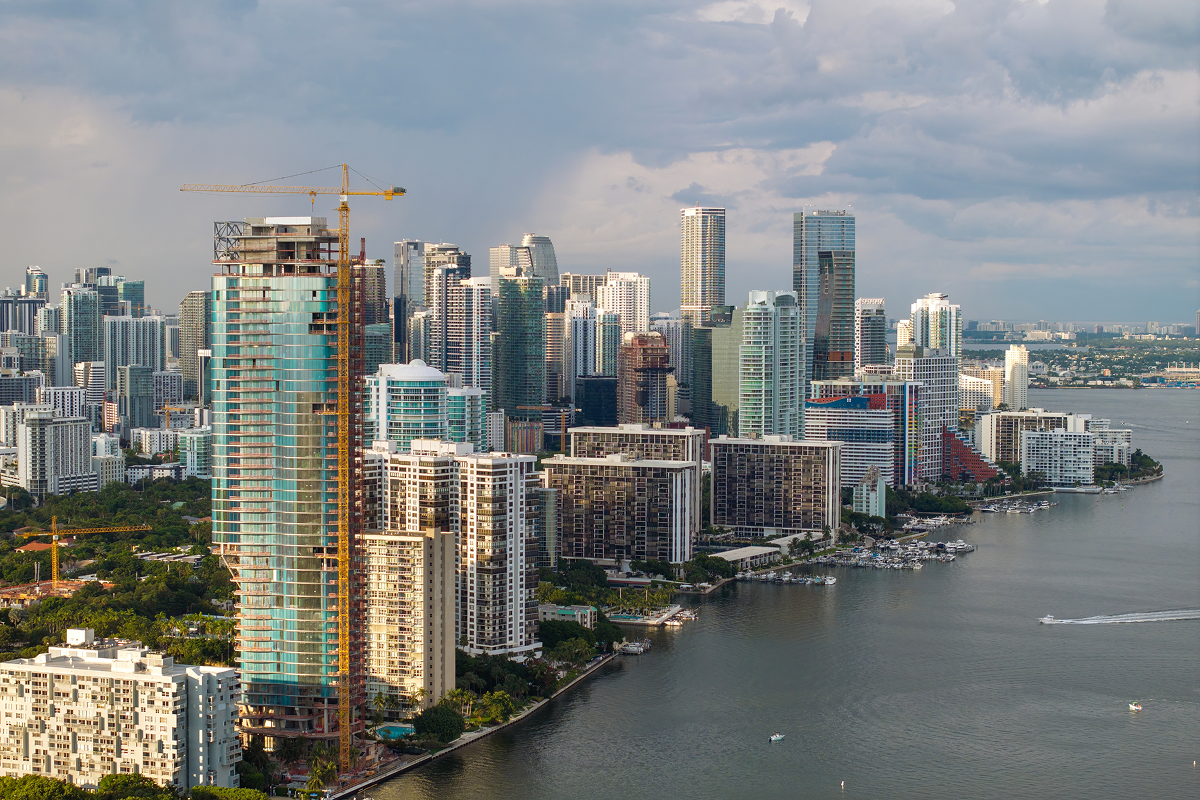
Miami’s Urban Development Review Board has backed three residential high-rise projects expected to add more than 2,100 apartments and condominium units across downtown Miami, Brickell and Edgewater. While the panel supported all three proposals, its criticism of Namdar Group’s architectural design highlighted the tension between maximizing development density and creating projects that distinguish themselves in an increasingly competitive market. The approvals also come amid a growing pipeline of branded residences across South Florida, raising questions about how future supply will compete for tenants and buyers.
The Public Assumption: More Towers Mean More Housing
Large residential projects are frequently viewed as a straightforward response to Miami’s housing demand, particularly in urban districts where land prices and development density encourage vertical construction. The three proposals reflect that approach, with developers seeking to deliver substantial residential capacity across several established metropolitan neighborhoods.
Namdar Group’s Namdar 101 project in downtown Miami represents the largest development among the proposals. The plan calls for two 42-story towers sharing a podium, containing 1,344 apartments. However, comments from board members suggested that maximizing the number of units may not necessarily produce architectural differentiation. The criticism reflects a broader development question: whether density alone is sufficient to create a competitive residential product when numerous projects are entering the same market.
The Economic Breakdown: Density Versus Differentiation
Namdar 101 is designed by Behar Font & Partners and illustrates the economic pressures associated with urban development. Developers must balance land acquisition, construction costs, financing, planning requirements and the revenue potential generated by residential space. Increasing density can potentially distribute land and infrastructure costs across a greater number of units, but the resulting economics depend on construction expenses, achievable rents, occupancy and the capital required to complete the project.
The board’s criticism of the design does not establish that the project is financially weak. Instead, it raises a separate question about differentiation. In markets with competing apartment developments, architectural identity, amenities, location and unit configuration can influence leasing performance. The source, however, does not disclose Namdar 101’s construction budget, financing structure, projected rents, operating expenses or expected returns, making it impossible to determine how its density-driven design translates into financial performance.
Market Segmentation: Downtown, Brickell and Edgewater
The three developments target different segments of Miami’s residential market. Namdar 101 introduces a large rental inventory into downtown, while the 76-story Breitling-branded condominium in Brickell is planned by Partners Group and Empira Group and will contain 369 units. The branded residence model introduces a different competitive mechanism, where brand affiliation and positioning can influence buyer expectations, although the project’s pricing, sales strategy and operating costs were not disclosed.
Cain and Kushner’s proposed 43-story Edgewater tower will contain 396 apartments. Together, the projects extend development activity across three urban districts rather than concentrating the entire pipeline in one neighborhood. Yet the source does not provide comparative rental projections, condominium pricing, absorption estimates or vacancy data that would establish how demand differs across these locations.
The Hidden Picture: Costs, Competition and Future Supply
Nearly 15,000 branded residential units are planned, under construction or recently completed across South Florida, placing the Breitling project within a substantial regional pipeline. This figure does not represent completed inventory alone, but it indicates the scale of competing branded developments that may eventually seek buyers.
Florida’s residential economics also extend beyond acquisition prices. Insurance, maintenance, property taxes and, in condominium buildings, association fees can influence ownership costs and buyer affordability. Condo regulations, including the structural inspection and reserve requirements associated with Florida’s SB 4-D framework, can further affect operating budgets and long-term ownership expenses. The available source provides no project-specific insurance, association, maintenance or vacancy estimates for these developments.
If Miami continues approving projects while residential supply expands across competing districts, the central question is whether density, branding and location will be sufficient to sustain demand once construction costs, ownership expenses and competing inventory are fully accounted for.
Related articles

SKN | Manhattan Ultra-Luxury Transaction Surge: Unleveraged Capital Concentration, Carrying Cost Drag, and Tier Bifurcation

SKN | Hollywood’s Development Pipeline Expands as Developers Target a Previously Overlooked Florida Market

