

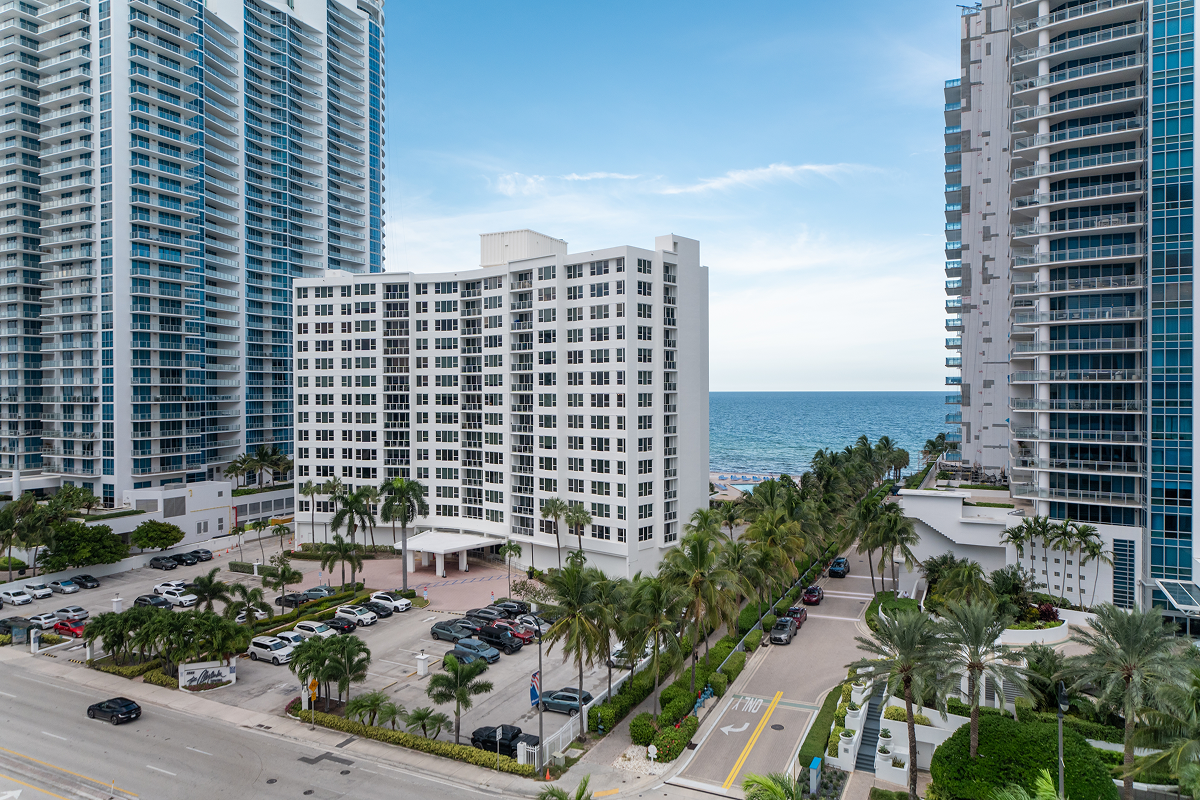
SKN | Hollywood’s Development Pipeline Expands as Developers Target a Previously Overlooked Florida Market

Hollywood, Florida, is emerging as a growing development destination as developers increasingly turn to a city historically overshadowed by Miami and Fort Lauderdale. Projects spanning residential construction, affordable housing, golf course redevelopment and medical facilities are reshaping the city’s development pipeline, reflecting a broader effort to capitalize on urban growth and changing regional demand. The scale of planned construction raises a fundamental economic question: whether the expansion of development activity reflects sustainable demand or a new competition for capital, residents and future occupancy.
The Public Assumption: Growth Will Follow Development
Hollywood’s renewed development interest reflects the assumption that locations previously overlooked by major developers can become attractive as established markets become more expensive, land availability tightens or development opportunities become more difficult to assemble. Positioned between Miami and Fort Lauderdale, Hollywood offers developers access to South Florida’s broader economic geography without necessarily competing within the same established urban submarkets.
The current pipeline includes projects from developers such as Related Group, Housing Trust Group and PPG Development. The range of proposals suggests that development activity is not limited to luxury residential construction, but extends across different property types and potential demand segments. Nevertheless, the number of proposed projects does not independently establish the depth of demand, the financial viability of individual developments or the pace at which new inventory can be absorbed.
The Economic Breakdown: Capital, Construction and Demand
Large development pipelines require substantial capital commitments before revenue becomes available. Land acquisition, permitting, construction financing, labor, materials, infrastructure and project-specific operating requirements can create lengthy exposure between initial investment and completion. Golf course redevelopment and medical facilities also introduce different financial structures from conventional apartment projects, with varying construction requirements, tenant or user demand and revenue timelines.
Affordable housing developments operate under additional economic constraints, potentially involving regulatory requirements, financing programs and restrictions on rents or eligibility. Their financial structures cannot be directly compared with market-rate residential projects without examining development costs, funding sources, permitted rents and operating expenses. The source does not provide project-level budgets, financing terms, expected rental rates, projected occupancy or construction timelines across the Hollywood pipeline, limiting the ability to assess profitability or the scale of capital exposure.
Market Segmentation: Residential, Institutional and Redevelopment
Hollywood’s development activity appears to encompass several distinct segments. Residential projects may target renters, condominium buyers or households seeking alternatives to more expensive neighboring markets. Affordable housing developments address a different income and financing framework, while medical facilities depend on institutional demand, healthcare operators and the economics of specialized buildings.
Golf course redevelopment introduces another land-use mechanism, potentially replacing or restructuring existing recreational assets to accommodate new development. However, the economic implications depend on the specific land-use approvals, infrastructure requirements, development density and the value of the existing property. Without detailed project information, it remains difficult to compare the relative scale or financial contribution of these segments.
The Hidden Picture: Ownership Costs and Absorption
Florida’s housing economics extend beyond construction and purchase prices. Insurance premiums, property taxes, maintenance expenses and condominium association fees can affect affordability, rental performance and ownership costs. For condominium developments, Florida’s structural inspection and reserve requirements under the SB 4-D framework can also influence long-term operating budgets, particularly where buildings require substantial maintenance or capital expenditures.
Coastal developments may face different insurance and maintenance exposures from inland properties, although actual costs depend on location, building characteristics, coverage and underwriting conditions. Hollywood’s growing pipeline therefore cannot be evaluated solely through the number of proposed units or projects. The crucial question is whether developers are entering a market where demand, financing capacity and operating economics can support the expanding supply without creating a growing mismatch between construction activity and absorption.
As Hollywood moves from a historically overlooked market toward a more active development landscape, how much of this pipeline is supported by measurable demand rather than the expectation that regional growth will eventually fill the new inventory?
Related articles

SKN | Manhattan Ultra-Luxury Transaction Surge: Unleveraged Capital Concentration, Carrying Cost Drag, and Tier Bifurcation

SKN | Miami Approves Three Towers, but Design Criticism and Supply Competition Raise Questions

